

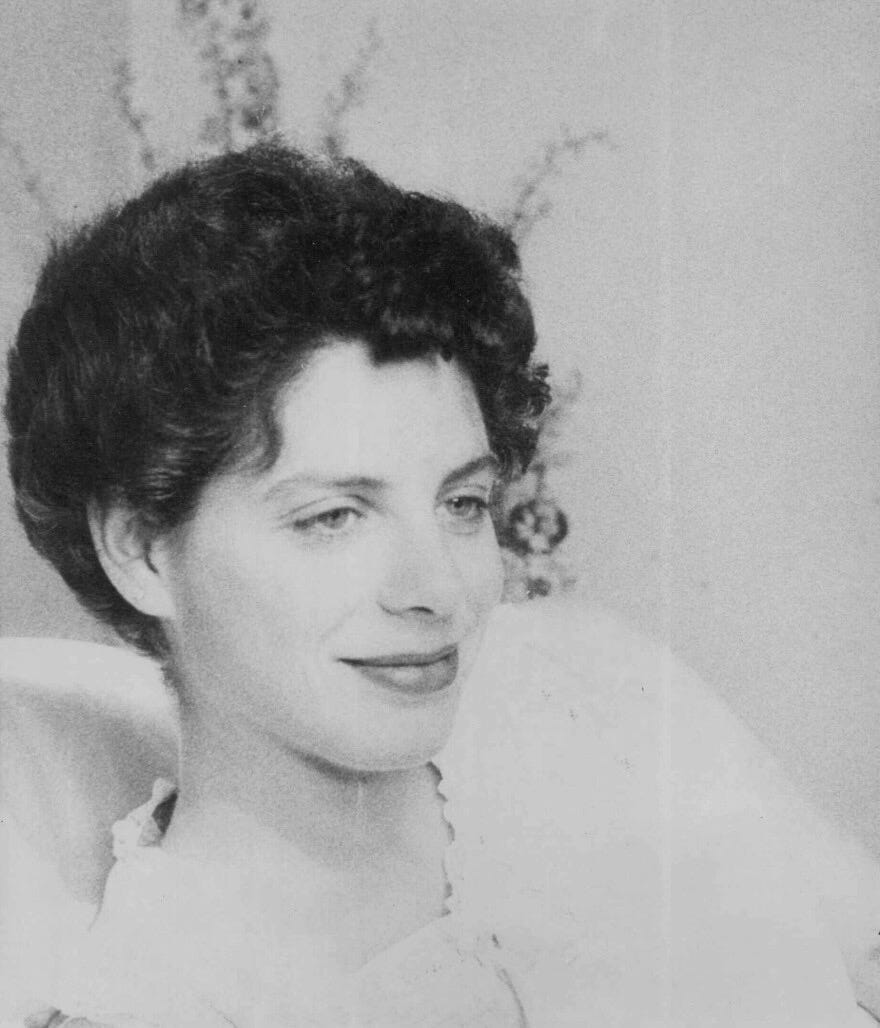
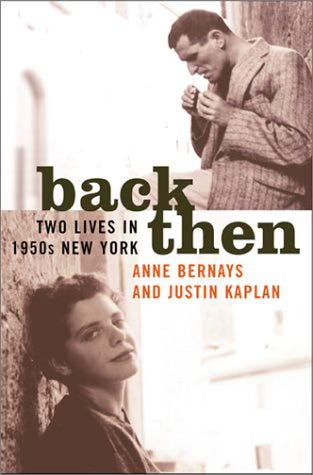
Anne Fleischman Bernays is the author of ten novels, the daughter of Edward Bernays, and the widow of Justin Kaplan. Her novel, Growing Up Rich, won the Edward Lewis Wallant Award for its contribution to the Jewish experience in America. Her father, a nephew of Sigmund Freud, founded the public relations industry. Her husband, a biographer of Mark Twain, Lincoln Steffens, and Walt Whitman, introduced storytelling into the genre. Anne and Justin cowrote The Language of Names: What We Call Ourselves and Why It Matters and a memoir, Back Then: Two Literary Lies in 1950s New York.
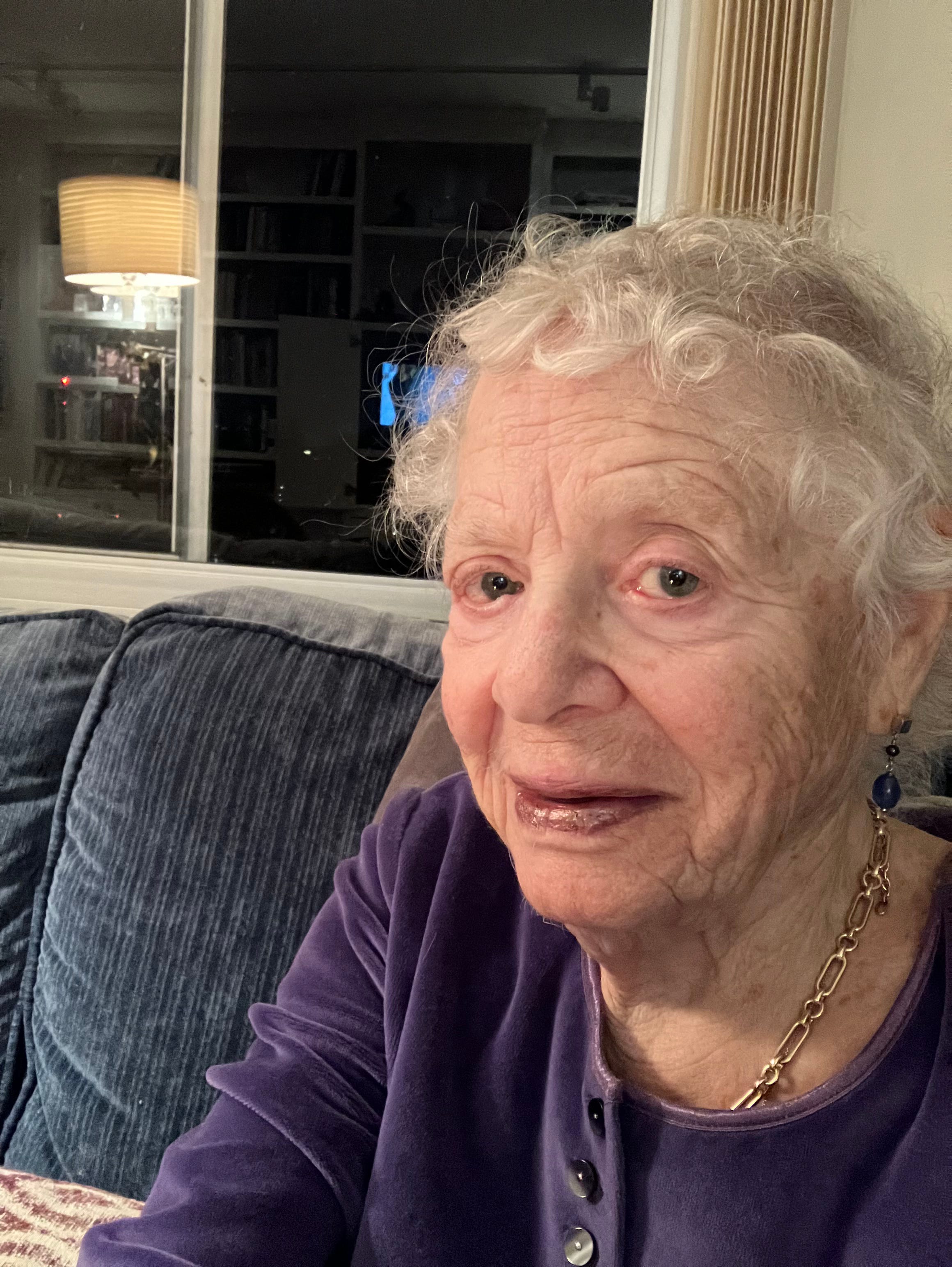
The memoir leaves off where our chat begins, with their move to Cambridge in 1959. The Francis Avenue home she shared with Justin (whom she calls Joe) once occupied the center of literary society in the city. Anne helped to found PEN/New England and served on the board of the National Writers Union. Since Justin’s death in 2014, ending their marriage of nearly six decades, she has lived alone in a high-rise along the banks of the Charles River.
I met her recently in the course of researching my biography of the sociologist C. Wright Mills. Justin, an editor at Simon and Schuster in the 1950s, had edited Mills’s pamphlet, The Causes of World War Three. That much I knew before I rang Anne’s buzzer. Inside, I learned about the personal relationship she and Justin enjoyed with Mills.
When I returned to chat, Anne shared some impressions of John Updike, Kurt Vonnegut, and Bernard Malamud. She mused on her husband’s paradoxical relationship to words and discussed the weekly writing class she still teaches. I found her, at 95, full of the mordant humor she appreciates in Muriel Spark and Evelyn Waugh, her favorite novelists. When I asked whether fellow scribblers still come by to see her, she said no. Why? “They probably think I’m dead.”
Anne: I considered writing a sequel to Back Then. Cambridge in the sixties was so dramatic, so earth-shaking. I remember families breaking up, friendships breaking up, friends stopping talking to one another. It split right down the middle, and it was angry. It was all over the Vietnam War. At one point we were called by a neighbor who happened to be a vice president of Harvard. He said, “Anne, pack up your manuscripts and whatever else you need, pack up the children, get in the car and leave Francis Avenue, because a mob of antiwar protestors is on the way.” Never happened.
Julia Child lived on Irving Street. She was a bit antisemitic. She used to shop at Savenor’s Butcher Shop, which she made famous. If you were one of their special customers, they would let you buy the whole side of beef or the whole side of pig. They would hang it up, and whenever you needed some meat, they would cut into it for you. We did it. Once, Julia and Joe were walking back from Savenor’s, discussing an article that had just come out in the Boston Globe Magazine. The article had suggested Savenor’s weighs the hook along with the meat—you know, that they cheat. “Well, what do you expect?” Julia said. Joe was horrified.
We lived in Cambridge for seven years before anyone talked to us. Then Joe won the National Book Award and the Pulitzer Prize. Suddenly, everybody started coming by. Kurt Vonnegut was teaching at Harvard when he visited. He was sitting on the couch chain smoking. I bugged him about it. I didn’t like smoking. I didn’t like it in the house, and I just couldn’t keep my mouth shut. Finally, Kurt turned to Joe and said, “will you please tell your wife to shut up?” Well, I had it coming. Kurt was charming. He and Joe got along fine. They had the same view of life. Joe was deeply skeptical and very humorous. And those two qualities you seldom find in the same person. Kurt was one.
Bernard Malamud was a good friend. He and Justin went for long walks and talked about writing their books. And then Joe would come back and report to me, “Bern was taking notes while I was talking.” When Bern’s next book came out [Dubin’s Lives], it was about a biographer. Joe said some passages in the novel were verbatim from the notes Bern took without permission. He never said a word to us. Meanwhile, Bern was trying to get me in bed. “You’ll like it,” he said, “and I’ll like it.” I never told Joe. I thought, well, if I tell him, he will stop liking Bern. They were very close.
John Updike was also a great admirer of Joe’s. He was a shit. He fucked every woman he could. I was rumored to be one of his girlfriends—absolutely untrue. I did play volleyball at his first house in Ipswich, a little town on the North Shore. We were there a lot. When he got very, very, very, very, very famous—and very, very rich—he bought a mansion with a driveway. We went out there for a party. He and Joe were talking by the fireplace. Joe noticed a pile of books on the table. “Those are galleys the publishers sent me,” John explained. “They want me to blurb these books.” When Joe asked what he did with them all, John said “I’ll show you.” He grabbed the top one and tossed it into the fireplace. I thought that was blasphemous. I thought, how can he do that? Can’t he imagine what that author would feel like if he knew? It was so brutal.
For the last five or six years, Anne has been giving a free writing class once a week for ninety minutes. In What If: Writing Exercises for Fiction Writers, she and her coauthor Pamela Painter claim “students learn to write not by thinking about writing or negotiating with their feelings, but by sitting down and actually writing.” I wondered whether the first question isn’t why some students aspire to become writers at all.
Anne: I think that they have an exaggerated feeling about what it’s like to be an author. I give them prompts and exercises. They’re supposed to do it during the week, and then we gather for a workshop. They read aloud while a partner takes notes. And then the pair goes quiet and the others comment. I’m teaching them how to be good editors. But it’s amazing how hard it is to get some things through their minds. They have no idea how to edit, to self-edit. They have to be two people. First is the writer, and then when you have a draft, a nasty, mean self-editor. You question every word.
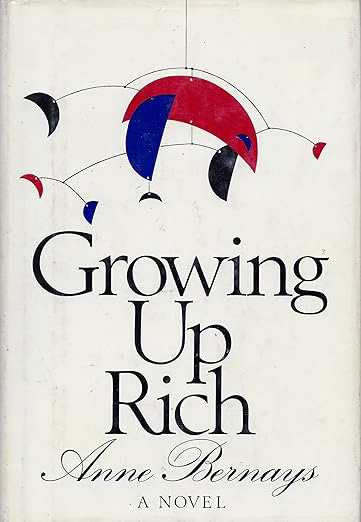
I was never taught writing. I took one class in four years of college [at Barnard]. I became a New York Times stringer. So I was writing, but I wasn’t writing fiction. Okay, how did I turn to teaching? It was 1975 and I just had my fifth novel published, Growing Up Rich. And that made it a little bit of a splash, with a very nice review in the Times. A close friend, a trustee of Brown & Nichols, mentioned the school’s English teacher had gotten sick and taken a leave. “Would you come and teach writing for this semester?” I said, “I don’t know how to teach. She said, “you know how to write, don’t you?” So that started it.
It took us maybe over two years to write What If. It’s the only book of mine that earns any money. It’s been adopted by hundreds of colleges. I’ve published ten novels, but whenever I go someplace and I’m introduced and someone says, “I read your book,” I know which one. At least somebody’s reading me.
As the general editor of Bartlett’s Familiar Quotations, Justin modernized the venerable compendium of 20,000 utterances with additions by the likes of Michael Jackson and Elvis Presley. But Justin’s own speech was not quotable. Middle daughter Hester recently published a biographical essay exploring the paradox of her writer father’s verbal reticence.
Anne: Joe was a man of written words, not spoken words. I learned this on our very first date together. We went to the Museum of the Metropolitan Museum. He was working for an art book publisher. I finally blurted out, “what are your enthusiasms?” I was so frustrated. But I sensed that he had enormous reservoir of emotion and love and brilliance. He could recite almost every poem he had ever read. Reams of it! Shut up with your poetry! He was a real introvert. And that’s not a negative thing, except that it can be difficult to communicate with him. I mean, it doesn’t mean that you’re unpleasant or that you don’t like people. It means that you’re incredibly shy. He told me about that, when he was younger, he sometimes crossed the street to avoid having to talk to somebody. Not because he didn’t like the person, but just because he was too shy to talk to them. He went through five years of psychoanalysis in New York.
Just a couple of years before he died, I said, “the children would like you to say ‘I love you’ to them.” He replied, “they know I love them.’ I said, “but they have to hear it.” For some reason, he couldn’t do it. He couldn’t say, “I love you.” He had a hard time saying it to me, but I knew he did. I mean, just the way he looked at me, the way he supported me, the way he comforted me, the way he suggested things for me to write, the way he was always thinking about me first. Maybe he was afraid of too much love, too much of an attachment. He certainly was not an unloving person.
He loved telling jokes and dirty limericks. He had the best sense of humor of anybody I’ve ever met. When we first got to Cambridge, a painter friend of mine who was married to a big wheel in the psychoanalytic community asked Joe to come and talk about parallels between psychoanalysis and biography. “I’d love for you to come and talk to the doctors about how you write a biography,” the big wheel said. “How do you dig into a man’s or a person’s life to make a story out of it, which is essentially what a psychoanalyst does.” I went with him. There was an auditorium full of people. At question time, a woman got up asked: “Mr. Kaplan, how do you feel about the oral triad?” He said, “the only oral triad I know is bacon, lettuce, and tomato.” He was what they used to call “a wit.”
I could not find the nerve to bring up her account in Back Then of a youthful erotic encounter with Anatole Broyard, author of Kafka Was the Rage: A Greenwich Village Memoir. Asking a woman of 95 about wild sex atop a kitchen table seemed indecent. (See pages 89 and 90 of Back Then, if you really want to know). But I did feel obliged to ask about the time she and Justin agreed to be photographed for one of WAAF radio’s bikini calendars.
Anne: Joe didn’t want to do the calendar. I talked him into it. They didn’t show any of the good parts! Even so, my friends said, “how could you do this?” Well, I’m a scamp. I’ll do anything.
I am privileged to be in her class now. She is the toughest of critics— and she has improved my writing immensely. Love her stories—and her. Thanks for this wonderful interview!
I just outlined my memories of Growing Up Rich for my husband while we were taking a walk. Upon returning home, I checked my grasp of the facts and they were pretty damn good (i was a little hazy on Sally being 1/2 Jewish). I read the novel over 20 years ago, yet deserve only scant credit. The credit balance goes to Anne Bernays for writing a wonderful novel which naturally compels the reader to remember well. More wonderful - AB's straight arrow characterization of Updike the Shit. Julia included on the shit list - I am horrified too. Deeply generous details on marriage to an introvert - I can relate. What deft and wise handling, or not, of Bern. I am happy to learn the Anne Bernays is still with us. I ordered her and her husband's Back Then from my library. I hope her daughters & grandchildren are taking good care of her. I am sure she is taking very good care of them. What. A. Woman. I also thank you for this excellent interview.